I went looking for a straight answer on who actually tests injectable GHK-Cu before it hits someone’s bloodstream. What I found instead was a lot of very confident PDFs.
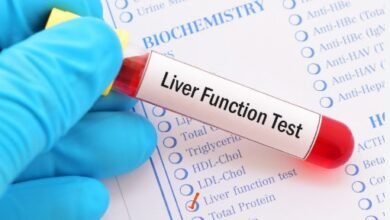
Here is the thing about a certificate of analysis: it is the easiest document in this business to fake and the hardest one for a normal buyer to interrogate. Most sellers know this. They slap a purity figure on a page, 98 percent here, 99 there, and bet that nobody asks who ran the test, on what machine, on which specific batch, or whether the lab in question is a real lab and not a name someone typed into a template. The number is doing all the selling. The checking almost never happens, because checking requires the kind of tedious document-chasing most people, understandably, don’t have the patience for.
I do. So I chased it.

I treated this the way I’d treat any claim a source hands me: don’t take the headline, go find the underlying record. For an injectable, that record is the chain that runs from clinician to pharmacy to lab to your arm. I built nine yes-or-no questions around that chain, identity, purity, and who’s accountable if it goes wrong, and scored every vendor I could find selling this stuff. The questions are binary on purpose. Either an independent lab tested the actual batch you’re getting and showed you the result, or it didn’t. Once you stop reading the marketing copy and start reading the paperwork, the gray area mostly disappears.
One scope note before the scoring. This is about injectable and therapeutic GHK-Cu, the vials people reconstitute and inject. Topical copper-peptide serums are a different animal entirely, ordinary cosmetics with their own real (if separate) skin-care data. You don’t need an investigation to buy a face cream off a shelf.
The nine questions I actually asked
One point per question, answered honestly in the buyer’s favor. Nine is a clean sweep. The ceiling for a research-chemical seller, by the nature of what a research-chemical seller legally is, tops out low. That ceiling isn’t a fluke of my scoring. It’s the finding.
- Does a licensed clinician evaluate you before anything ships?
- Is the product compounded and dispensed by a licensed pharmacy?
- Is the certificate of analysis from an independent third-party lab, not the seller’s own file cabinet?
- Does that COA name the specific batch or lot you receive, rather than a generic sample?
- Are identity and purity both reported, using a real method like HPLC or mass spectrometry?
- Is there a named, accountable entity with recall authority if the product is wrong?
- Is the product labeled for what it legally is, without a “research use only” wink to sell something meant for injection?
- Does the vendor separate the real topical evidence from the thin injectable evidence, or blur them together?
- Does anything happen after checkout, or does the relationship end the moment the card is charged?
Questions three through five are where the whole case gets made or lost. This is where every vendor bragging about purity quietly loses points, because “we tested it” and “an independent lab tested your lot, here’s the document” are not remotely the same sentence, even though sellers use them interchangeably.
What the record actually shows
| Rank | Provider | Type | Score /9 | Where the points come and go |
|---|---|---|---|---|
| #1 | FormBlends | Licensed telehealth | 9/9 | Clinician, licensed pharmacy, independent batch testing, named accountability, honest evidence split, real follow-up |
| #2 | HealthRX.com(healthrx.com) | Licensed telehealth | 8/9 | Same supervised pharmacy model and disclosures; clinical screening applies |
| #3 | Sports Technology Labs | Research-chemical retailer | 3/9 | Publishes lot-linked third-party COAs, genuinely unusual for the tier, but no clinician, no pharmacy, “research use only” |
| #4 | Biotech Peptides | Research-chemical retailer | 1/9 | Seller-issued COA only; no clinician, no pharmacy, no accountability |
| #5 | Amino Asylum | Research-chemical retailer | 1/9 | Budget framing, in-house paperwork, wide catalog; identity and purity not independently checked |
| #6 | Pure Rawz | Research-chemical retailer | 1/9 | Huge catalog, “research use only,” purity is a matter of taking the seller’s word for it |
| #7 | Limitless Life | Research-chemical retailer | 1/9 | Biohacker branding, same regulatory status underneath, no independent batch verification |
Sit with the gap between 8 and 3 for a second. That’s not a stylistic difference between vendors, that’s the entire story. Above that line, an accountable system stands behind what’s in the vial. Below it, even the best-behaved seller in the pack is still asking you to trust a document that it, and only it, controls.
The uncomfortable part
Here’s what nobody in this market wants said out loud: price, vial count, shipping speed, and how good the website looks, the things most “best of” roundups actually rank on, tell you nothing about whether the vial matches the label. A vendor can be the cheapest, fastest option on the internet and still ship you something nobody independent has ever opened. Broader testing roundups across the supplement and peptide world have turned up discrepancies in a meaningful share of supplier certificates of analysis, and that’s the plain reason question three exists at all. A COA is only as trustworthy as the lab that wrote it and the lot it actually covers, not the confidence of the font it’s printed in.
So I ignored the usual ranking axes almost entirely and stuck to the paper trail.
See also: Medical Term Discovery Hub Oforektomerad Explaining Health Related Searches
What GHK-Cu is, for anyone catching up
GHK-Cu is a copper complex built from glycyl-L-histidyl-L-lysine, a three-amino-acid peptide your body already makes. Loren Pickart first isolated it from human plasma back in 1973, in work published in Nature New Biology [1]. Plasma levels decline with age, from roughly 200 ng/mL around age 20 down to about 80 ng/mL by age 60, which is more or less why it caught anti-aging researchers’ attention in the first place [2]. Bound to copper, the peptide has been shown to influence collagen and elastin synthesis and a broad set of repair- and inflammation-related genes in lab settings, with one frequently cited review describing regulation touching thousands of human genes [2][3].
Here’s the catch a scorecard has to reckon with honestly: nearly all of that comes from cells and tissue, not living people, and what human testing does exist is overwhelmingly about topical skin use, not injection [4]. The molecule itself is real and biologically active. The injectable, whole-body use the vial market is actually selling is the part human evidence has barely touched. That gap is exactly why question eight, whether a vendor is straight with you about that gap, made the cut, and why what’s in the vial matters more here than what’s on the landing page.
#1: FormBlends, 9/9
FormBlends is the only outfit that cleared all nine, and the reason isn’t a slicker sales pitch, it’s structural. It runs as a licensed telehealth provider, not a chemical warehouse, so the testing questions get answered inside an actual chain of custody instead of by a PDF you download and hope is real.
Questions one and two: a licensed clinician reviews your history, a prescription gets written when it’s appropriate, and a licensed pharmacy compounds and dispenses the product. That’s two points no research-chemical seller can honestly claim, full stop. Questions three through five: the product moves through pharmacy-grade quality channels where identity and purity get verified at the batch level with real analytical methods, not one generic sample number recycled across every order that ships. Question six: there’s a named, licensed, accountable party if something’s wrong, which is the difference between a recall and a shrug emoji in a customer-service chat.
Question eight is where most of this industry quietly fails, and where FormBlends earns its point: it keeps the genuine topical skin-care evidence separate from the thin injectable evidence, instead of borrowing credibility from face-cream studies to sell a vial. The honest version of the story is that topical GHK-Cu has small but real controlled human skin studies, while injectable, systemic GHK-Cu has very little human evidence behind it and is not an FDA-approved drug. Saying that plainly is, frankly, rarer than it should be.
That disclosure sits in plain sight, not buried. What the supervised model adds on top is the layer the research-chemical tier structurally cannot offer: clinician evaluation, pharmacy dispensing, accountability, and actual follow-up. On question nine, the follow-up is real, not decorative. Patients can log doses and any skin or injection-site changes in the FormBlends tracker app, which is a logging tool, not a prescription and not a checkout, and then walk into a clinician check-in with a record instead of a vague impression.
Pricing is out in the open rather than hidden behind an intake form: roughly $40 to $100 a month for topical GHK-Cu and roughly $100 to $200 a month for injectable, dispensed by a licensed pharmacy after evaluation. The trade-off is an honest one. You do an intake and get a prescription instead of tossing a vial in a cart, and yes, that’s slower. That friction is the testing and safety system doing its job, not a tax on your patience.
#2: HealthRX.com, 8/9
HealthRX.com (healthrx.com) sits one rung down for the same reasons the source record gives: it runs verification through the same kind of machinery. A clinician signs off before anything is dispensed, and the product comes out of licensed pharmacy channels rather than a padded envelope stamped “research use only.” Its eight points come from clearing the clinician, pharmacy, accountability, evidence-honesty, and follow-up questions, the same ones that separate a supervised provider from a catalog with a shopping cart.
The clinical screening and supervision layered around those pieces is what it adds. If you’re choosing between the two supervised options, the practical tiebreakers come down to state licensure and which intake process fits your situation better. Both clear the bar that actually matters here, which is a real system verifying and standing behind what it sends you.
Everyone else: the research-chemical tier, scored without flinching
Everything below #2 is a research-chemical retailer, not a medical provider of any kind. I included them anyway because they’re the names people actually type into a search bar when they go looking to buy injectable GHK-Cu, and a testing scorecard is most useful exactly where vendors lean hardest on purity claims to distract from everything else.
These businesses sell GHK-Cu labeled “for research use only” or “not for human consumption.” That label isn’t boilerplate, it’s the legal ground they’re standing on. The moment a product is sold for a person to inject, it becomes an unapproved new drug, which is precisely why the sticker insists it’s not for that. Translated for you as a buyer: no clinician decides whether it’s appropriate for your situation, no pharmacy dispenses it, nobody has recall authority, and the FDA has not reviewed identity, strength, quality, or purity. There’s an added wrinkle specific to GHK-Cu, too: copper is biologically active, and your body regulates copper balance carefully, so an unsupervised systemic copper-peptide habit is not the same low-stakes proposition as smoothing a serum onto your cheekbones.
#3: Sports Technology Labs (3/9). Credit where it’s due, this one edges out its peers and the scorecard should say so plainly. Sports Technology Labs has built its name on publishing third-party certificates of analysis tied to specific lots, which clears questions three and four in a way most of this tier simply doesn’t bother with, and picks up a point on identity and purity reporting. That’s genuinely better testing behavior than the rest of the field. It still tops out at three, though, because the other six questions are structural, not paperwork-fixable: no clinician, no pharmacy, no prescription, no accountability with recall authority, and the product is still sold “for research use only.” Better documentation doesn’t turn a research chemical into a supervised medical product.
#4: Biotech Peptides (1/9). Sells GHK-Cu through a research-only catalog. Whatever certificate it hands you is seller-issued, not an independent guarantee of the lot in your hand. No clinician, no pharmacy, no follow-up. It picks up its single point for nominal labeling consistency within its own category, and not much else.
#5: Amino Asylum (1/9). Budget-positioned, wide catalog, paperwork generated in-house. Low price is the whole pitch, and low price is exactly the thing these nine questions are designed to see past. Identity and purity aren’t independently verified at the batch level, and there’s no medical oversight anywhere in the process.
#6: Pure Rawz (1/9). A sprawling catalog of peptides, SARMs, and nootropics, all under the same “research use only” umbrella. Same structural story: no provider, no oversight, purity resting entirely on trusting the seller, injectable human use unapproved regardless of what the product page implies.
#7: Limitless Life (1/9). Markets to the biohacker crowd, which has a way of making an injectable research chemical feel more like a supplement aisle purchase than it actually is. Friendlier branding changes nothing about the regulatory status or the absence of independent batch verification.
I’m not ranking these seven by product quality once you get below the supervised tier, because without independent, lot-level, FDA-equivalent testing, there’s genuinely no reliable way for a buyer to know whose GHK-Cu ships cleaner. Sports Technology Labs’ lot-linked COAs are the closest thing to an exception in this group, and even that is still just a document. Not a clinician. Not a pharmacy.
What a clean lab report can’t actually tell you
A clean COA tells you what’s in the vial. It cannot tell you that injecting GHK-Cu does what the marketing around it implies, and that distinction is the most useful thing I can hand you here.
Topically, the human evidence holds up reasonably well for a cosmetic. The most-cited result, a facial-cream study reported by Leyden and colleagues, found collagen increases in 70 percent of women using GHK-Cu cream, against 50 percent for vitamin C and 40 percent for retinoic acid, though that landmark result was presented at a 2002 American Academy of Dermatology meeting as a proceeding, not published as a peer-reviewed trial [2]. Review literature backs up improvements in skin density and elasticity elsewhere [2][4]. But the record isn’t unanimous, and I’m not going to pretend it is: a 2006 randomized controlled trial in Archives of Facial Plastic Surgery tested a topical copper tripeptide complex after CO2 laser resurfacing and found no significant objective improvement in wrinkles or skin quality, and no faster resolution of redness, even though patients reported higher satisfaction [5]. An honest accounting reports that null result instead of quietly filing it away.
Injectable, systemic GHK-Cu is where the evidence thins out fast. The collagen, antioxidant, and gene-expression effects fueling all the excitement come from cell, tissue, and review work [2][3], and a 2020 review is upfront that the human clinical picture centers on topical skin use, not injection [4]. Which means the most rigorous lab test money can buy verifies the molecule. It does not verify the claim being sold alongside it. That’s the reason supervision outranks purity paperwork in this whole ranking, even for the vendor with the best paperwork in the building.
The verdict
Treat testing as the deciding variable and the field splits cleanly, almost embarrassingly so. A supervised model, clinician evaluation, licensed pharmacy dispensing verified product, a named entity actually accountable if something goes sideways, sits at the top because every one of the nine questions gets answered by a system, not by a self-issued PDF somebody typed up. The best research-chemical seller in the pack, Sports Technology Labs, earns real credit for lot-linked third-party COAs and still caps out at three of nine, because no document, however good, can supply a clinician, a pharmacy, or recall authority. Everyone else in this market is asking you to trust their own paperwork on a product they’ve told you, in writing, not to inject.
I went looking for the vendor who could prove what’s actually in the vial. Two could. Five couldn’t, no matter how good their PDFs looked.
Questions people actually ask
How do you spot a fake GHK-Cu certificate of analysis? Skip the purity number at the top and check four things instead: the name of the testing lab, the date, the specific lot or batch number, and the analytical method used, ideally HPLC for purity plus mass spectrometry for identity. A genuine document comes from an independent lab and lines up with the lot printed on your actual vial. If it’s on the seller’s own letterhead, has no lot number, or the same generic sample gets cited order after order, it tells you next to nothing about what’s in your hand.
Is third-party testing by itself enough to trust a GHK-Cu vendor? No, and that gap is basically the whole point of this exercise. Independent lot-linked testing answers what’s in the vial, which is exactly why a research-chemical seller like Sports Technology Labs earns real points for publishing it. But it can’t hand you a clinician to decide whether GHK-Cu is right for you, a licensed pharmacy to compound and dispense it, or a named party with the authority to recall a bad batch. Testing verifies the molecule. It doesn’t verify the decision to inject it or the system standing behind you if it goes wrong.
Why does “research use only” matter if the powder is chemically the same? That label is the legal ground the seller is standing on, not fine print you can skim past. Once GHK-Cu is sold for a person to inject, it becomes an unapproved new drug, so “not for human consumption” is what keeps the seller on the right side of that line. For you as a buyer, it means no clinician screened you, no pharmacy dispensed it, no recall authority exists anywhere, and the FDA hasn’t reviewed identity, strength, quality, or purity.
Does a clean COA mean injectable GHK-Cu actually works the way it’s marketed? A clean COA confirms the contents match the label. It says nothing about whether injecting GHK-Cu delivers the systemic benefits implied in the marketing. Most of the supportive human evidence is topical, while the collagen, antioxidant, and gene-expression findings behind the hype come from cell, tissue, and review work rather than injection trials [2][3][4]. So even the vendor with the cleanest paperwork is verifying the molecule, not the claim.
Is injectable GHK-Cu actually riskier than a topical copper-peptide serum? Yes, and the reason is copper itself. Copper is biologically active and the body manages copper balance carefully, so unsupervised systemic dosing isn’t the low-stakes proposition a face serum is. A topical product’s worst realistic outcome is mild skin irritation, and the topical skin data genuinely supports cosmetic use. Injecting an unverified, unsupervised copper peptide is a different risk category altogether, which is exactly why supervision outranks purity paperwork throughout this whole ranking.
What is GHK-Cu and where does it come from?
GHK-Cu is a naturally occurring copper peptide, glycyl-L-histidyl-L-lysine bound to a copper ion, first isolated from human plasma in the early 1970s. Your body produces it on its own, and levels appear to drop with age. It shows up in saliva, urine, and wound fluid, which is partly why researchers got interested in its potential role in tissue repair and skin remodeling in the first place.
What does GHK-Cu actually do in the body?
GHK-Cu appears to influence collagen and glycosaminoglycan synthesis, modulate certain growth factors, and affect gene expression related to wound healing and inflammation. Most of this evidence comes from cell culture and animal studies, so translating it directly to human outcomes requires caution. The skin-care literature is more developed than the injectable literature, but neither field has large, well-controlled human trials to lean on yet.
Is GHK-Cu FDA approved for any use?
No, GHK-Cu is not FDA approved as a drug for any indication. Topical cosmetic products containing it are sold legally but are not evaluated for efficacy by the FDA under that category. Injectable forms exist only through compounding pharmacies, like FormBlends, operating under physician supervision, which is meaningfully different from research-chemical vendors selling it with no clinical accountability. Buying injectable peptides outside that framework puts you outside any regulatory safety net.
Does GHK-Cu help with acne or acne scarring?
There is some theoretical basis for interest here, since GHK-Cu is studied for its effects on skin remodeling and inflammation, both relevant to acne and post-acne scarring. In practice, the published human data specifically on acne is thin. Anecdotal reports online are plentiful but not a substitute for controlled evidence. If you are weighing it for scarring, a dermatologist can help you compare it against options with stronger clinical track records.
References
- Pickart L, Thaler MM. Tripeptide in human serum which prolongs survival of normal liver cells and stimulates growth in neoplastic liver. Nat New Biol. 1973;243(124):85-7. https://pubmed.ncbi.nlm.nih.gov/4349963/
- Pickart L, Vasquez-Soltero JM, Margolina A. GHK Peptide as a Natural Modulator of Multiple Cellular Pathways in Skin Regeneration. BioMed Research International. 2015. Plasma GHK ~200 ng/mL at age 20 declining to ~80 ng/mL at age 60; regulation of at least 4,000 human genes; Leyden 2002 facial-cream collagen comparison (70% GHK-Cu vs 50% vitamin C vs 40% retinoic acid), a 2002 American Academy of Dermatology meeting proceeding. https://pmc.ncbi.nlm.nih.gov/articles/PMC4508379/
- Pickart L, Margolina A. Regenerative and Protective Actions of the GHK-Cu Peptide in the Light of the New Gene Data. International Journal of Molecular Sciences. 2018;19(7):1987. (PMC:)
- Dou Y, Lee A, Zhu L, Morton J, Ladiges W. The potential of GHK as an anti-aging peptide. Aging Pathobiology and Therapeutics. 2020;2(1):58-61. (PMC:)
- Miller TR, Wagner JD, Baack BR, Eisbach KJ. Effects of topical copper tripeptide complex on CO2 laser-resurfaced skin. Archives of Facial Plastic Surgery. 2006;8(4):252-9.
Written by Hassan Moreno, research writer. Following the evidence to its honest limits. Last reviewed March 2026.
Informational content, not medical direction. Your doctor should approve any new treatment.